Playbook #67: How a Telegram Mini App Built a Community That Buys
Pull up DexScreener's trending board and the name sitting on top right now isn't $GRAM or $UTYA. It's @sixsevenapp - a Telegram mini app that went past a million users in about two months and out-trades the next ten names on the list put together. How it reached the top is the dull question; that slot rotates weekly and costs next to nothing. The one worth answering: how did a mini app drag a million people into a sector the market had written off a year ago, do it with no points farm, and end up with holders who buy the token rather than wait to be handed it? We worked with the $67 team on product and community, so this is the playbook behind the numbers - including the calls that looked wrong the day they were made.
Enter a category the market had buried
After the last airdrop season, "Telegram mini app" stopped being a category and turned into an insult. Retention collapsed across the board, tokens from the biggest apps bled out, funds stopped taking meetings in the vertical, and CT settled on "the meta is dead".
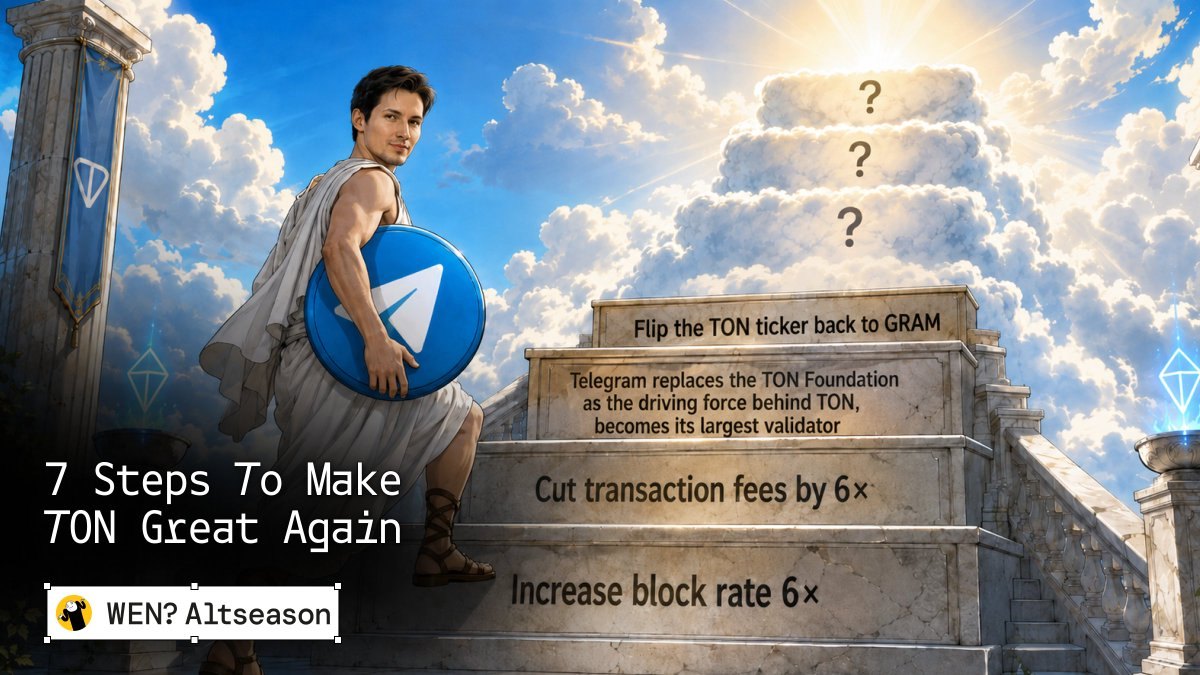
Then Durov laid out his 7 steps of MTONGA - a signal that mini apps are becoming a structural part of where Telegram is heading. Most of the market shrugged. The $67 team read it as a starting gun: if the platform is committing to the category, the rational move is to grow with the platform rather than wait for sentiment to recover.
The second reason to move was cost. Empty categories are cheap. When nobody is launching, attention costs almost nothing, users have no ten identical apps to compare you against, and every mechanic you ship looks new. Acquisition is never cheaper than the moment the market calls a category dead. So they launched a brand new app into a graveyard, on purpose.
Hire for scar tissue
The team behind $67 isn't new to this. They built and ran some of the largest Telegram mini apps of the previous cycle - apps with tens of millions of users and full token lifecycles behind them. What that experience produced wasn't a growth hack. It was a precise, expensive list of what to avoid. They watched the biggest apps of last season die from the inside, and they knew the exact day the death lands on: airdrop day. Every time.
Why every points economy dies
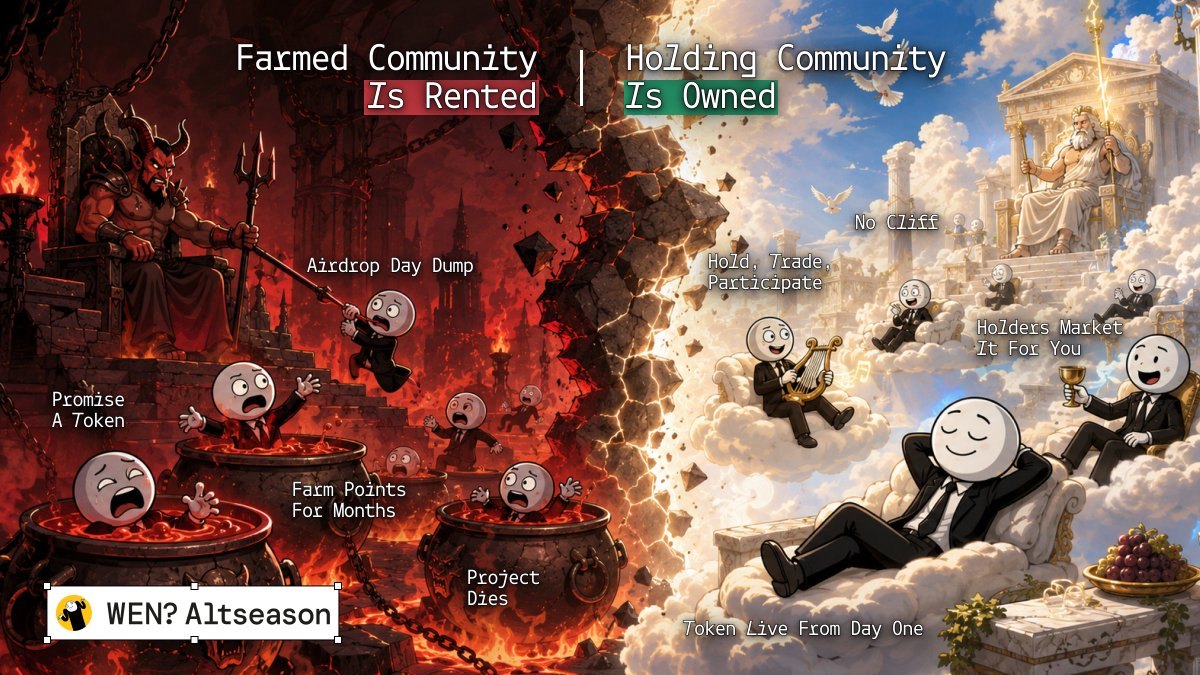
The old model has a clean anatomy. The app promises a future token. Users farm points for months as unpaid work, chasing an expected payout. The airdrop lands, points convert to tokens, and millions of "employees" get paid in the same second. There is one rational move: sell. The token collapses under coordinated sell pressure, the reason to open the app disappears, and the project dies the day it "succeeds".
The flaw is structural: a points system rewards people for eventually leaving. Each farmer is a seller in waiting, and the day tokens drop is the day the whole crowd turns into someone else's exit liquidity.
Flip the sequence: token first
The core call was to flip the timeline. Rather than dangle a token at the finish line, $67 shipped it early, and it has been trading from the start. That single change rewires every incentive. There's nothing to wait for, so there's no cliff and no single date where everyone cashes out at once. Supporting the project stops being farming and becomes participation: holding, joining token events, buying assets with your own money. And holders become distribution - a person with even a small bag talks about the project, defends it in replies, and brings friends. A points farmer never does that. Why market something you're planning to dump?
The growth chart proves it
The variables here are unusually clean. Getting to the first 100,000 users was slow - months of grinding with the standard toolkit. Then the token went live, and holding rewards, incentives and events appeared around it. From that exact point the curve went vertical: roughly 100K to 1M users. Same app, same team, same market. The only new variable was a live token with activity built around it. The token didn't reward growth that had already happened - it caused it.
$67 in numbers
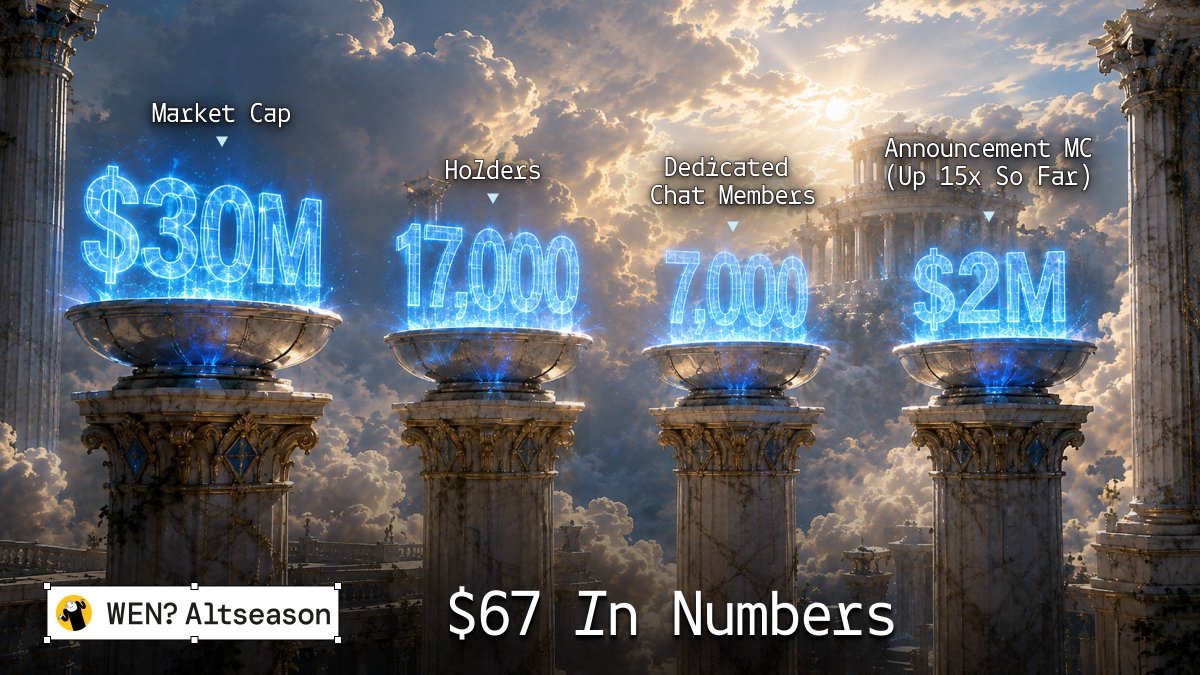
- Market cap above $30M, still climbing.
- 17,000+ holders - a huge number for a GRAM token.
- Announced to the community at a $2M cap, so the people who listened early are up roughly 15x.
- A dedicated holders chat of 7,000 people - close to 4 of every 10 holders in one room, talking to the team daily.
Here the early crowd wasn't the exit - it was the best-priced entry on the table. Most of those bags are tiny, and that's the point: seven thousand people who spent their own money, even $20 of it, act nothing like the 700,000 who were grinding points for a payout. Only one of those groups has skin in the game.
Ship like every release is an experiment
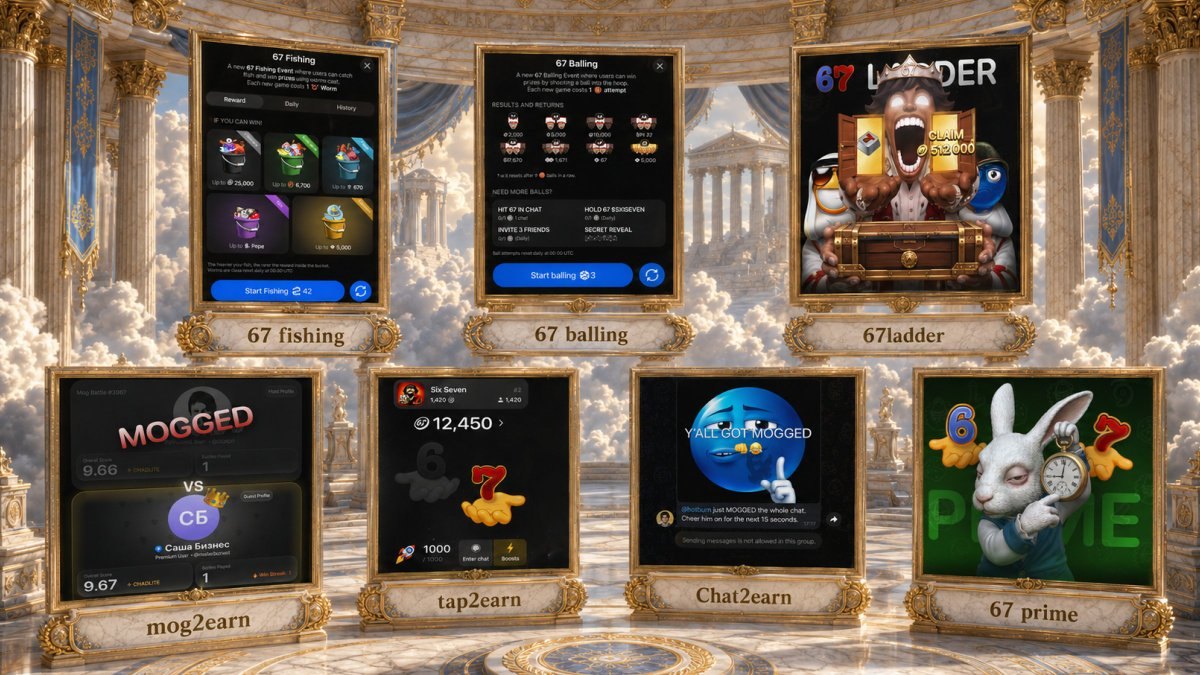
The product side runs as a constant iteration loop, and every release tests a hypothesis. Chat2Earn was the starting point - a simple chat where messages earn points, the lowest-friction daily engagement. Tap2Earn brought the clicker back as a self-aware nod to last season, and it worked as both nostalgia and joke. Mog2Earn scores user profiles and pits them against each other, on the bet that status and competition retain better than passive accumulation. Referral events layered structured growth on an audience that already had a reason to invite. 67 Balling, 67 Fishing, 67 Ladder and 67 Prime kept the calendar full with payouts in the token, gifts and GRAM.
Cadence matters as much as content. Churn in this category is brutal, and shipping something new constantly is what keeps the community from running out of reasons to open the app. Cadence is the retention mechanic.
Surviving the FUD
Distrust toward mini apps is enormous right now, and $67 gets called a scam on a regular basis. Meanwhile the team has distributed over $50,000 in rewards out of its own pocket and keeps giving the token away through events. The friction is less about trust than about expectations: a large part of the audience wants to get rich immediately and demands the airdrop now, while the team isn't halfway through the roadmap. Nothing argues that gap away except paying out, shipping, and letting the track record talk. In this market, "scam" is often what people call a project that hasn't made them rich yet.
What's next - don't let the airdrop undo the work
The forward plan follows the same logic. Listings chosen for liquidity: venues that solve a specific need of the project, depth first, over collecting exchange logos. A significantly higher cap set as the explicit goal before major distribution. And an ongoing airdrop, released in waves. One giant unlock drops the whole supply on a single date - the exact move that killed the category. Waves spread the supply out, keep sell pressure absorbable, and give the community recurring events to rally around instead of one final goodbye.
The takeaways
If you're building anything community-driven, on any network, the $67 case compresses into five rules:
- Move in while the sector is out of favour. Attention costs the least when sentiment is on the floor.
- A tradable token beats an IOU. It converts would-be farmers into actual holders.
- Let the token power growth from day one, instead of parking it at the finish line.
- Keep shipping, relentlessly. A steady release cadence is the real retention mechanic here.
- Never unlock the entire supply on a single date. Spread the airdrop across many smaller events.
Every rule traces back to one mechanism: people protect what they bought and offload what they got for free. The mini app category isn't finished - the lazy way of running it is.
We've been part of the $67 build on product and community. If you're launching on TON or anywhere else, we can help design the mechanics, the token sequence and the growth. Reply in under 1 hour, custom proposal within 24 hours.
Talk to us →Not financial advice. Do your own research. Figures reflect the situation at time of writing and move fast.